Skip to content
 cart
cart

Collection: PERFUME DUPES - EQUIVALENTS
Understanding perfume notes: top, heart, and base
A perfume is generally composed of three main families of olfactory notes: top notes, heart notes, and base notes. Each has a very specific role and evolves differently on the skin depending on its evaporation rate.
Perfumers use this structure, known as an "olfactory pyramid," to create a harmonious and balanced fragrance. Over the hours, the perfume evolves gradually, revealing different facets of its character.

Top notes
These are the first scents perceived after spraying the perfume. Fresh, light, and highly volatile, they provide the initial impression of the fragrance but disappear quickly, usually after about thirty minutes.
They often include citrus, green, or aromatic accords.
Heart notes
The heart notes appear once the top notes have dissipated. They represent the soul of the perfume and give it its full personality. More persistent, they can remain perceptible for several hours.
These notes are often floral, fruity, or spicy and constitute the fragrance's main signature.
Base notes
Base notes are the richest and longest-lasting. They reveal themselves slowly and can remain present on the skin for many hours, or even several days on clothing.
They provide depth, warmth, and longevity to the perfume. Woody, amber, musky, or vanilla scents are frequently used in this category.
This olfactory construction is also essential in the world of inspired perfumes or "dupes," as it allows for the recreation of the original perfume's different facets while offering an accessible alternative.
-
Laxuria No. 27-35ML
Vendor:LAXURIARegular price €3,00 EURRegular priceUnit price per -
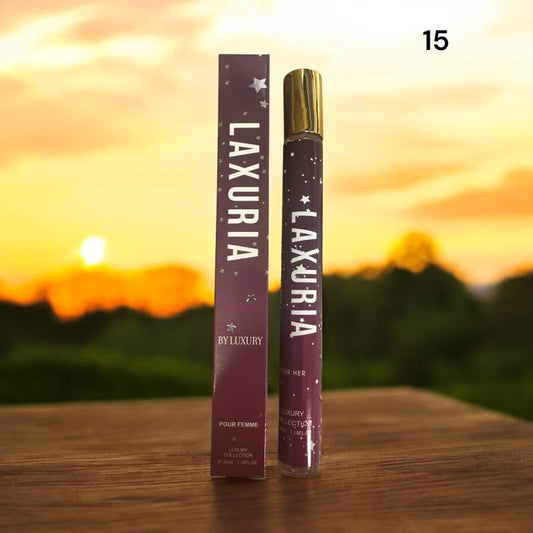
Laxuria No. 15-35ML
Vendor:LAXURIARegular price €3,00 EURRegular priceUnit price per -
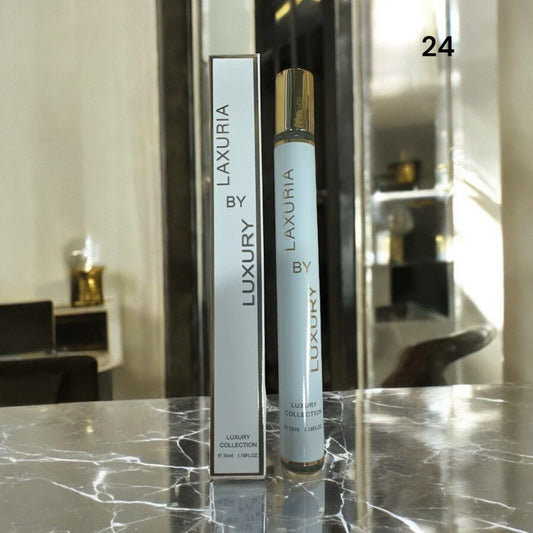
Laxuria No. 24-35ML
Vendor:LAXURIARegular price €3,00 EURRegular priceUnit price per -
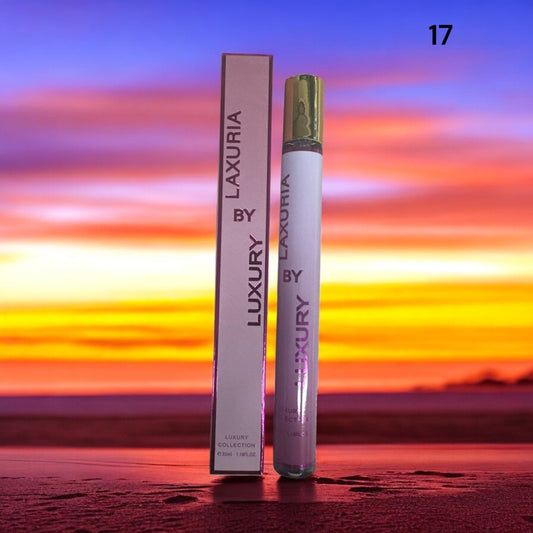
Laxuria No. 17-35ML- Unisex
Vendor:LAXURIARegular price €3,00 EURRegular priceUnit price per -
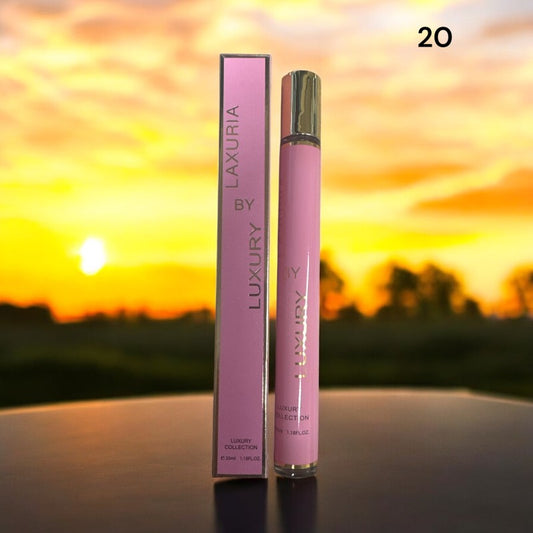
Laxuria No. 20-35ML
Vendor:LAXURIARegular price €3,00 EURRegular priceUnit price per -
Laxuria No. 19 - 35ML
Vendor:LAXURIARegular price €3,00 EURRegular priceUnit price per -
Laxuria No. 8 - 35ML
Vendor:LAXURIARegular price €3,00 EURRegular priceUnit price per